
How to Import a Food Trailer from China: Documents, Certification and Buyer Checklist
Importing a food trailer from China is manageable when the project is treated as a compliance-and-logistics workflow, not only as a product purchase. Before you pay a deposit, define the trailer’s intended country of operation, confirm the equipment and layout in writing, identify the documents your customs broker and local authorities require, and make the factory prove the finished unit against the approved specification. The exact requirements depend on the destination, trailer classification, road rules, electrical and gas systems, and local food-service regulations. This guide separates informational planning from commercial supplier evaluation and transactional pre-shipment checks so a B2B buyer can move from concept to a documented order without relying on assumptions.
1. Start with the destination-market brief
The first import document is not a form—it is a clear brief. Record the country, state or province, intended operating location, trailer use, menu, tow vehicle, power supply, fuel type, service window position, and whether the unit will be registered for road use. A trailer that works operationally may still need changes before it can be registered or approved in the destination market. Ask your local authority, vehicle-registration office, food-safety authority, customs broker, and licensed electrician or gas professional which rules apply before the design is frozen.
Do not assume that a factory’s general statement such as “international standard” replaces destination-specific review. Greenfist’s site describes custom food trailers for global markets and lists support for different regional requirements, but the buyer remains responsible for confirming the exact approval path for the importing jurisdiction. Put every market-specific requirement into the quotation and technical specification: required lighting, braking, couplings, VIN or identification data, electrical frequency and voltage, gas arrangement, fire protection, water and wastewater provisions, food-contact surfaces, ventilation, and documentation language.
Informational, commercial and transactional intent
- Informational: understand the import sequence, documents and approval questions.
- Commercial: compare factories on engineering, production controls, export experience and support.
- Transactional: approve drawings, sign the specification, arrange inspection, clear customs and register the trailer.
2. Confirm the product specification before requesting a quotation
A quotation is only comparable when the underlying specification is comparable. Attach a written layout and equipment schedule to the RFQ. Include the overall trailer concept, interior zones, service openings, storage, sinks, fresh-water and wastewater arrangement, electrical loads, ventilation, cooking equipment, refrigeration, branding, spare parts and packing requirements. Ask the supplier to mark what is included, optional, excluded or supplied by the buyer.
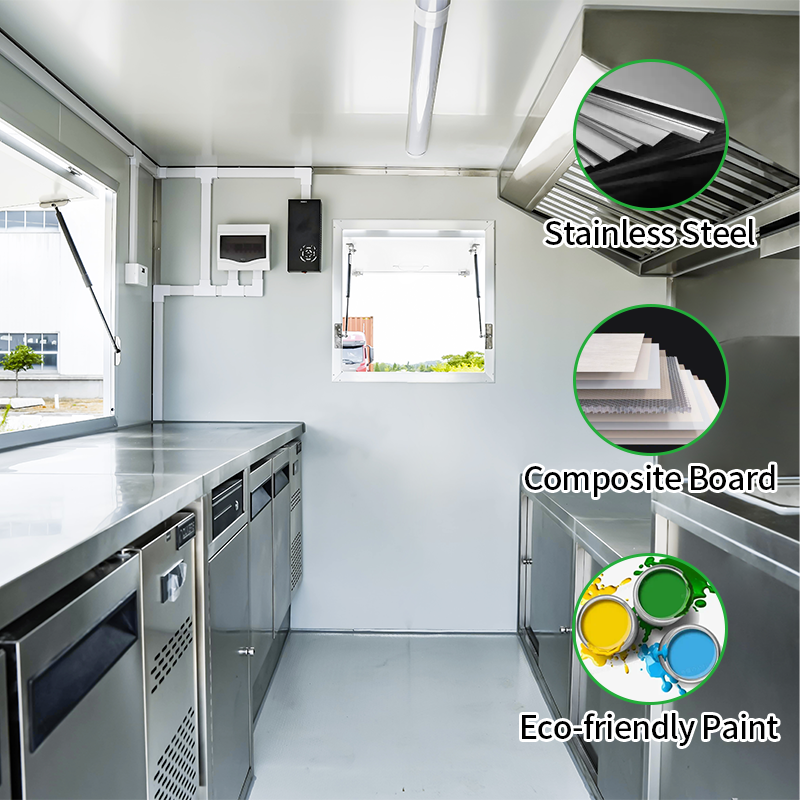
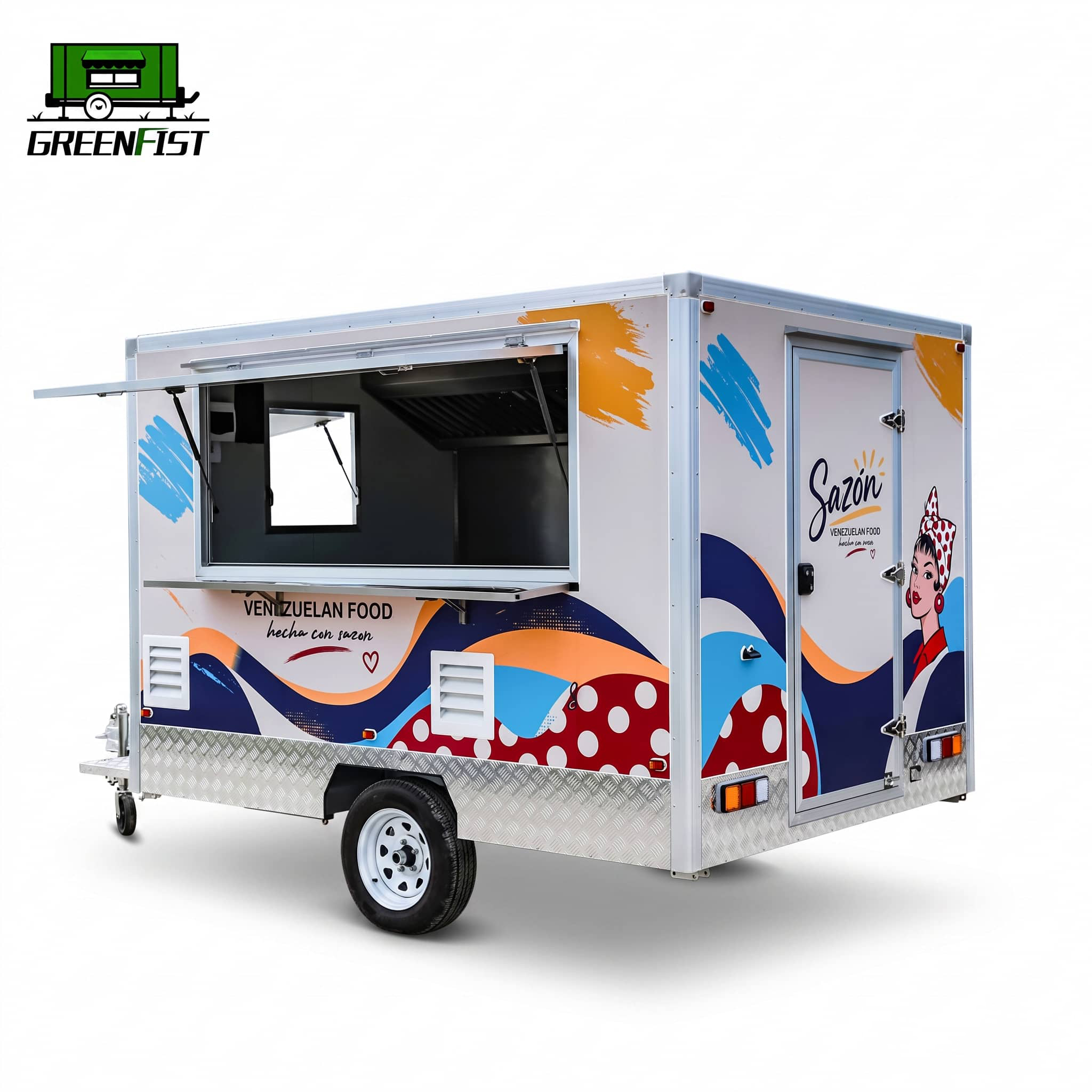
The Greenfist website describes square food trailers with customizable size, layout, equipment, water and electrical systems, service windows and ventilation. Its product and company pages also describe food-grade 304 stainless-steel interiors, in-house production and full-process inspection. These are useful questions to verify in the project specification; they are not a substitute for a signed drawing, equipment list or destination-market approval review.
3. Build a document pack with the factory and broker
Document requirements vary by country and shipment, so use this as a buyer-side checklist rather than a universal legal list. Ask the factory and freight or customs professionals to confirm which documents are required for your transaction, who issues each one, and which details must match across every document.
| Document or record | What the buyer should verify | Why it matters |
|---|---|---|
| Commercial invoice | Buyer, seller, description, quantity, currency, Incoterm and value are consistent | Supports customs valuation and payment records |
| Packing list | Packages, dimensions, gross/net weights and marks match the shipment | Helps loading, inspection and clearance |
| Sales contract or purchase order | Approved scope, payment stages, delivery point and remedies are written | Defines the commercial transaction |
| Bill of lading or sea waybill | Shipper, consignee, port and cargo description are correct | Identifies the ocean shipment |
| Certificate of origin, if required | Issuer and origin information meet the destination rule | May be requested for customs treatment |
| Technical specification and drawings | Revision, equipment, utilities and materials match the ordered unit | Creates the inspection baseline |
| Test and inspection records | Results identify the actual trailer or production batch | Supports pre-shipment acceptance |
| Registration or conformity documents | VIN, safety, electrical, gas or other records match the destination request | Supports local approval discussions |
Ask for document samples early, but do not treat a sample as proof that your final shipment will receive the same document. Names, serial numbers, dimensions, weights, origin, tariff classification and consignee details must be checked against the final unit and shipping file.
4. Treat certification as destination-specific
Certification is not one universal label that automatically authorizes operation everywhere. The required path can depend on whether the trailer is treated as a road vehicle, a commercial trailer, a mobile kitchen, equipment, or a combination of these under local rules. It can also depend on whether it contains gas appliances, electrical systems, refrigeration, fire-safety equipment, or materials subject to food-contact requirements.
Greenfist’s Certifications page describes ADR certification upon request, CE marking for relevant EU directives, DOT and VIN support for North America, food-contact surfaces using 304 stainless steel, and ISO 9001 factory quality management. The page also explains that the applicable certification and registration path depends on the market. Use those statements as a starting point for a written compliance matrix: requirement, responsible party, evidence, test or inspection stage, and final approval authority.
For the United States or Canada, ask the competent registration authority and a customs broker which trailer identification, lighting, braking, VIN, state or provincial, and food-service requirements apply. For the European market, ask the authority in the specific member state or destination country about vehicle approval, towing, electrical, gas and food-service rules. For any destination, obtain professional advice where the project involves regulated gas, electrical or road-safety systems. Never publish or rely on a blanket claim that a trailer is “legal everywhere.”
5. Audit the factory and quality process
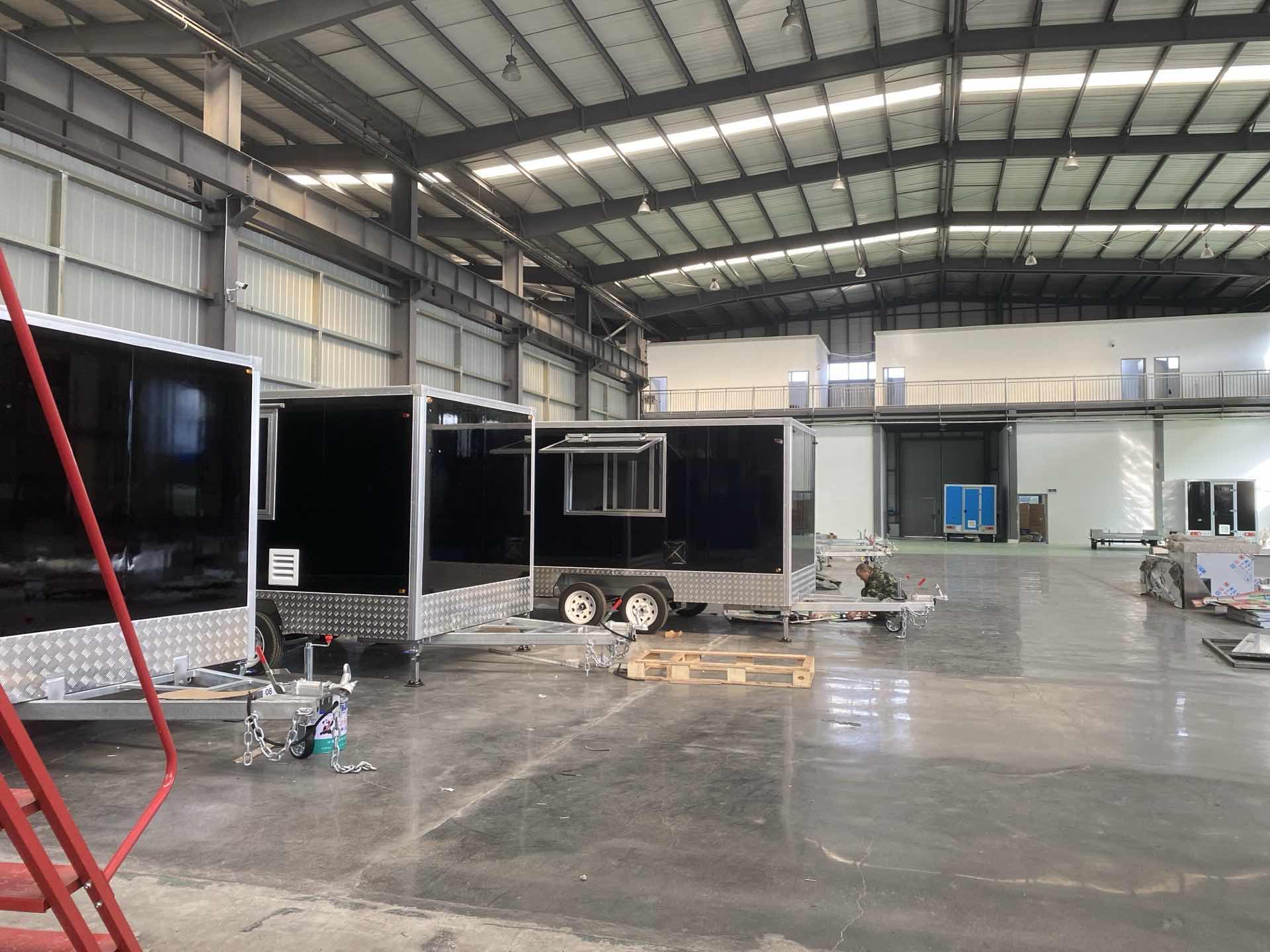
A low-risk import is easier when quality is verified at multiple gates instead of only when the container arrives. Ask for the factory address, production scope, ownership or operating details that can be independently checked, and a live or recorded walkthrough of the relevant production areas. Match the supplier’s answers against the approved drawing and the actual inspection plan.
Greenfist’s Quality Control page describes six test groups and 28 test items covering structural and material integrity, safety performance, waterproofing and environmental sealing, electrical systems, kitchen functions, and road simulation and durability. Specific examples listed on the page include frame and body strength, anti-corrosion coating, brakes, lighting, safety chains, rain and roof sealing, insulation resistance, power load, gas leakage, ventilation, sink and drainage, towing performance and cornering stability. Ask which of these tests apply to your configuration, what evidence will be supplied, and which third-party or local checks remain your responsibility.
A practical inspection sequence
- Approve the drawing, equipment schedule and utility loads.
- Confirm the chassis, body, interior materials and installed equipment against the revision-controlled specification.
- Check workmanship, doors, windows, service openings, seals, storage, drainage and access for maintenance.
- Witness or review applicable electrical, water, gas, ventilation, waterproofing and road-related tests.
- Record defects with photographs, responsible party, correction date and acceptance criteria.
- Release the balance payment only according to the contract and inspection result.
- Reconcile the final packing list and shipping documents with the accepted trailer.
6. Plan shipping, customs and delivery handoff
Decide the delivery term with your freight professional and understand which party pays for transport, insurance, export clearance, import clearance, duties, taxes, port charges, inland delivery, unloading and storage. Confirm whether the trailer ships as a complete unit, in a container, or under another arrangement. Obtain the packed dimensions and weights from the final packing plan rather than using an early estimate.
A buyer should also plan for arrival handling. Confirm the destination port, broker contact, required customs data, unloading equipment, storage-free period, final delivery route, and whether the trailer can be moved safely to the inspection or registration location. Keep the commercial invoice, packing list, transport document, origin record where required, technical file, inspection record and insurance documents together. If documents conflict, stop and resolve the discrepancy before clearance rather than asking a broker to guess.
Delivery timing should be treated as a project variable. The Greenfist website contains different delivery references in different areas, so this article intentionally does not promise a standard production or delivery time. Request a project-specific schedule after the design, equipment, inspection and shipping assumptions are fixed.
7. Use this pre-order buyer checklist
Before signing, confirm each item below in writing:
- Destination country and operating jurisdiction are identified.
- Menu, service model, staffing and daily workflow are documented.
- Trailer layout, equipment schedule, utilities and materials are revision-controlled.
- The quotation clearly separates included, optional and excluded items.
- The supplier’s company identity and manufacturing location have been reviewed.
- Applicable road, electrical, gas, food-service and registration requirements have named owners.
- Certification and conformity evidence has a defined issue point and responsible party.
- Factory inspection and defect-correction steps are written into the contract.
- Final packed dimensions, weights, marks and loading plan will be confirmed before shipment.
- Customs broker, freight forwarder and local approval contacts are appointed.
- Spare parts, manuals, warranty or after-sales scope and technical support channels are documented.
- Payment release is tied to agreed milestones and acceptance evidence.
Frequently asked questions
What documents are usually needed to import a food trailer from China?
Common commercial and shipping records can include a purchase contract, commercial invoice, packing list and bill of lading or sea waybill. A certificate of origin, technical specification, inspection record, conformity evidence and registration documents may also be requested depending on the destination. Confirm the exact set with your broker and local authorities.
Is a CE, DOT or VIN document enough to operate a food trailer?
Not automatically. Those terms relate to specific conformity, vehicle or identification requirements, and their relevance depends on the market and configuration. Ask the destination authority what approval path applies and match the final trailer evidence to that path.
Can the factory arrange all import compliance?
A factory can provide technical information and may support documentation or market-specific configurations, but the importer should confirm local requirements with the competent authority and qualified professionals. Responsibility should be allocated in the contract instead of assumed.
Should I inspect the trailer before the final payment?
A pre-shipment inspection is a sensible commercial control for a customized order. Use the approved drawing and equipment schedule as the baseline, document defects and corrections, and follow the payment and acceptance terms in the contract.
How do I compare food trailer factories in China?
Compare manufacturing scope, engineering communication, quality records, inspection process, documentation discipline, export support, customization capability and after-sales response. Price is only one part of the comparison; a lower quote with unclear exclusions can create higher landed cost and approval risk.
What should I ask about the trailer’s electrical and gas systems?
Ask for the design voltage and frequency, load schedule, wiring protection, equipment ratings, gas type and connection arrangement, ventilation, leak testing and destination-specific professional review. Do not operate or modify regulated systems without qualified local guidance.
Does importing the trailer mean it is ready to trade?
No. Import clearance, road registration, food-service approval, insurance, site permissions and business licensing are separate steps that vary by jurisdiction. Build a local launch checklist before placing the order.
Author and review note
This buyer guide was prepared for Greenfist’s overseas B2B audience using the company’s published Home, About Us, Quality Control and Certifications pages, together with the site’s published product and guide content. It is general procurement information, not legal, customs, tax, engineering or regulatory advice. Review the final specification and approval path with the relevant authorities and qualified professionals in the destination market.
Ready to discuss an import-ready specification?
If you are evaluating a custom food trailer from China, send Greenfist your destination market, menu, preferred layout, equipment list and documentation questions through the Contact page. You can also review Products, learn about Greenfist’s factory and manufacturing approach, read the Quality Control process, and review Certifications and compliance information. For a related buying perspective, see the B2B food trailer manufacturer checklist. Send the brief first; the right quotation should follow a defined scope.
Last updated: November 10, 2026
Official references for the final review
For destination-specific validation, consult the competent authority rather than relying on a general checklist. U.S. buyers can start with CBP’s guidance on importing a motor vehicle. EU buyers can use the European Commission’s Access2Markets portal to review destination-specific trade, tax and product requirements. These references are starting points; they do not replace advice for the exact trailer configuration and destination.