
Coffee Trailer Equipment Checklist: Espresso, Water, Power, Storage and Service Window
Short answer: a coffee trailer should be specified as a complete workflow, not as an espresso machine placed inside a trailer. Before requesting a quotation, define the drinks menu, espresso setup, water and drainage plan, electrical supply, refrigeration, dry storage, handwashing, waste handling, service window, and staff movement. The correct equipment list depends on your menu, expected service pattern, local approval requirements, and the trailer layout. This B2B checklist separates informational planning, commercial comparison, and transactional pre-order checks so you can turn a coffee concept into a documented mobile-kitchen specification.
Published: November 12, 2026 | Reviewed: November 12, 2026
1. Start with the coffee menu and service model
The menu should determine the equipment, not the other way around. A trailer serving espresso, Americano, cappuccino, and tea has a different brief from one also preparing iced drinks, smoothies, breakfast items, or packaged food. Write down every drink, ingredient, cup size, preparation step, and handoff point before you choose a machine or ask a manufacturer to quote.
At the informational stage, answer these questions:
- Which drinks are core products, and which are seasonal or optional?
- Will you serve dairy, plant-based milk, syrups, ice, tea, or blended drinks?
- Will drinks be made by one person or by a barista-and-runner team?
- Will orders arrive only at the service window, or also through a POS, event queue, or pre-order channel?
- Do you need a dedicated handoff shelf, condiment area, or customer-facing display?
This brief helps you avoid two common B2B mistakes: buying equipment that cannot fit the intended workflow, or requesting a trailer quote without enough information for the supplier to define utilities and storage. A manufacturer can only compare layouts accurately when the menu and operating assumptions are explicit.
2. Espresso equipment: specify the complete bar, not only the machine
The espresso machine is the visual centre of many coffee trailers, but it is only one part of the beverage station. Your specification should cover the grinder arrangement, filtration or treatment required for the water source, milk handling, cup and lid storage, knock box or waste point, cleaning access, and the path from order to handoff. If the menu includes brewed coffee, tea, or cold drinks, those stations should be included in the layout rather than added after the drawings are approved.
| Equipment area | Planning questions for the buyer | What to confirm with the manufacturer |
|---|---|---|
| Espresso station | How many drinks must be made in parallel? Where are beans, cups, and milk stored? | Working clearances, counter position, service access, electrical load, and cleaning access. |
| Grinding and preparation | Do you need separate grinders, scales, tamping space, or a brewed-coffee station? | Counter depth, ventilation around equipment, cable routing, and placement beside the machine. |
| Milk and cold drinks | Which milk types, syrups, ice, or chilled ingredients are in the menu? | Refrigerated storage, drain access, food-safe preparation surfaces, and staff reach distances. |
| Handoff and POS | Where are finished drinks labelled, staged, and collected? | Service-window position, pass-through shelf, customer queue space, and protection from weather. |
Do not describe a machine only by brand or capacity when requesting a quotation. Provide the selected model or a performance requirement, then ask the manufacturer to show how it will be installed, powered, serviced, and used during the busiest part of the workflow. Exact machine specifications and utility requirements should be confirmed for the individual project; they should not be inferred from a catalogue image or a generic trailer description.
3. Water, drainage, and hygiene: design the service loop
A coffee trailer needs a practical water loop for beverage preparation, handwashing, cleaning, and wastewater handling. The equipment schedule should identify the fresh-water source, pump or pressure arrangement if applicable, filtration or treatment, handwashing point, wash-up requirements, wastewater collection, and access for cleaning and maintenance. The final arrangement must be reviewed against the destination market and the authority responsible for the operating site.
For the design review, ask the manufacturer to show:
- Where fresh water enters, is stored, and reaches the relevant fixtures.
- Where handwashing takes place without crossing the beverage handoff path.
- How wastewater is collected, accessed, and removed.
- Which components can be inspected or replaced without dismantling unrelated equipment.
- How pipes, tanks, pumps, and connections are protected during towing and daily operation.
Use conditional language in the specification where local rules are not yet confirmed. For example, ask for a water and drainage layout “subject to destination-market review” instead of claiming that one universal tank arrangement or certification will be accepted everywhere. Greenfist’s certifications page is a useful first-party reference, but it does not replace confirmation by your local authority or licensed professionals for the exact installation.
Hygiene also affects the position of counters, sinks, storage, and the service window. A compact plan can still work well when clean preparation, waste handling, staff movement, and customer handoff are deliberately separated. The test is not how many appliances fit in the drawing; it is whether the team can use and clean the trailer safely during service.
4. Power and utilities: document loads before the layout is frozen
Power planning is a design input, not a final installation detail. List every electrical device, its nameplate information, operating mode, and likely simultaneous-use pattern. Include the espresso machine, grinders, refrigeration, water equipment, lighting, POS, ventilation or extraction equipment where applicable, and any auxiliary appliances. If gas or another fuel source is part of the design, document it separately and obtain destination-specific professional review.
Ask for a utility schedule that distinguishes confirmed equipment from equipment still under selection. The schedule should identify circuits or connection points, control-panel access, cable routes, equipment clearances, service access, and the assumed power source. Avoid publishing a single total load or plug arrangement until the actual equipment list and destination supply have been checked.
Greenfist’s published Quality Control page describes a testing programme that includes electrical-system tests and kitchen-function tests. That is useful evidence of the types of checks the factory documents on its site, but the buyer should still request the project-specific test record and ask what was tested on the completed trailer. A general quality statement is not the same as a destination-market approval.
5. Refrigeration, dry storage, and staff reach
Storage should be allocated by ingredient and by service frequency. Milk and other chilled ingredients need a place that is cold, reachable, and close enough to the beverage station to avoid repeated crossing of the work area. Beans, tea, cups, lids, syrups, napkins, cleaning supplies, and packaging need dry storage, but they should not all compete for the same cabinet. Reserve a clearly identified location for waste and for items that must be replenished during service.
Use a simple three-zone review:
- Immediate reach: items used for nearly every order, such as cups, lids, beans, and the most-used milk.
- Secondary reach: ingredients and packaging replenished during a rush but not used in every drink.
- Reserve storage: backup stock, cleaning materials, and event-day supplies that should not obstruct production.
Measure the workflow with the actual team. A storage cabinet may look efficient on a plan but become a bottleneck if its door blocks the service path or if a staff member must turn away from the espresso station to restock cups. Request a final layout showing equipment footprints, door swings, access panels, service window position, and the intended movement direction.
6. Service window and front-of-house workflow
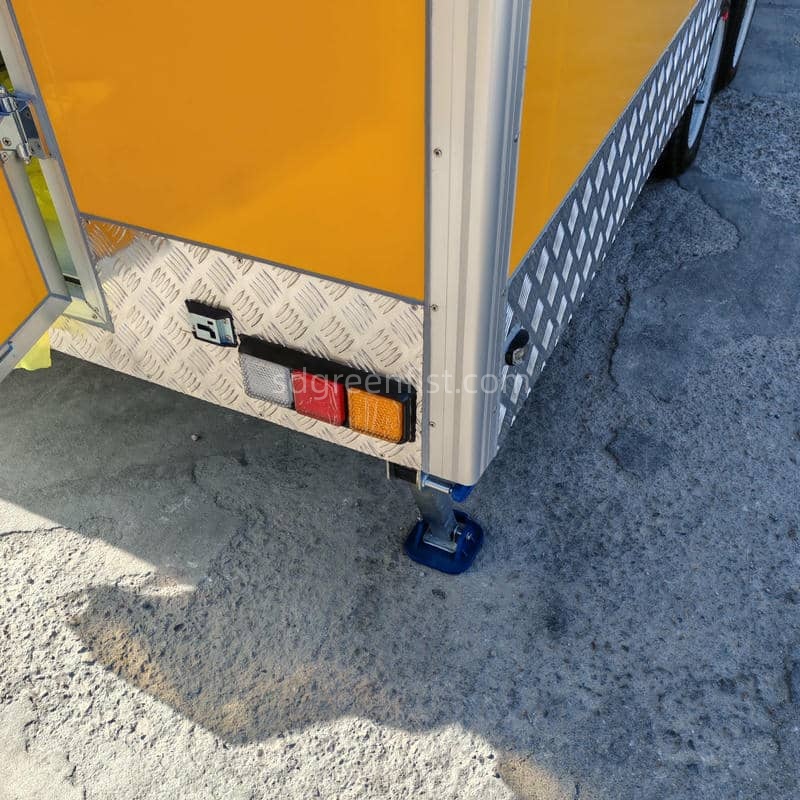
The service window connects the mobile kitchen to the customer. Its position should reflect the order queue, the finished-drink handoff, weather exposure, menu board or display needs, and the number of staff working behind it. A coffee trailer that has an efficient espresso station can still feel slow if the order point, payment point, and handoff point compete for the same small opening.
Define the front-of-house sequence in writing:
- The customer reads the menu and joins the queue.
- The order is received and paid for through the agreed channel.
- The order is placed where the barista can see it without leaving the station.
- The drink is prepared, checked, and staged.
- The customer collects it without entering the production path.
Then ask the manufacturer to map that sequence onto the trailer drawing. Confirm counter height, shelf depth, window opening direction, protection for equipment, lighting, signage allowance, and the location of any POS or receipt hardware. Do not add a second service window merely because it looks attractive; add one only when the menu and staffing model justify a separate flow.
7. A B2B order checklist before approving the quotation
When the project moves from commercial comparison to a transactional purchase decision, convert the concept into a controlled specification. The quotation should be traceable to a drawing and equipment schedule, not just a model name. Use this checklist before approving the final version:
- Menu, service model, staffing assumption, and destination market are written down.
- Espresso equipment, grinders, refrigeration, water equipment, storage, and POS scope are identified.
- Electrical, water, drainage, fuel, ventilation, and access assumptions are documented.
- Final layout drawing shows equipment positions, service window, doors, clearances, and maintenance access.
- Materials, finishes, colours, graphics, and any buyer-supplied equipment are listed.
- Inspection and testing points are agreed, including what evidence will be supplied before shipment.
- Destination-market review remains with the buyer’s local authorities and qualified professionals where applicable.
- Any unresolved item is marked as open rather than silently treated as included.
Greenfist’s About Us page presents Shandong Greenfist Industry Co., Ltd. as a supplier of custom food trailers and mobile food solutions, while the Products page is the site’s product entry point. Use those pages as starting points, then request a project-specific drawing, equipment list, and scope of supply before you compare quotations.
Frequently asked questions
What equipment is essential in a coffee trailer?
The essential set depends on the menu, but a typical brief covers espresso preparation, grinding, refrigeration or chilled storage, water and handwashing, wastewater handling, dry storage, service-window equipment, lighting, POS, and cleaning access. Confirm the exact equipment and utilities for the project rather than assuming a universal package.
Does every coffee trailer need the same espresso machine?
No. The suitable machine depends on the drinks menu, staffing model, expected service pattern, available power, water arrangement, maintenance plan, and destination requirements. Ask the manufacturer to design around the selected equipment and to show clearances and service access on the final drawing.
How should I plan water and wastewater?
Start with the fixtures and cleaning workflow, then document fresh-water supply, filtration or treatment where needed, handwashing, wastewater collection, access, and maintenance. Have the final design checked against the requirements of the market where the trailer will operate.
How much power does a coffee trailer require?
There is no reliable universal figure. Add the nameplate information for each selected device and identify which items may run at the same time. The final utility schedule should be based on the actual equipment list and destination power supply, with professional review where required.
Can a small coffee trailer serve a large menu?
It can serve a menu only when the equipment, storage, staff movement, utilities, and service sequence fit the available space. A longer menu usually increases refrigeration, storage, preparation, cleaning, and handoff requirements. Test the workflow before approving the layout.
What should I request from a food-trailer manufacturer?
Request a project-specific equipment schedule, final layout drawing, utility assumptions, materials and finishes, inspection or testing plan, scope of supply, open-item list, and destination-market questions. A clear record makes supplier comparison more useful than comparing exterior photos alone.
Where can I discuss a custom coffee trailer project?
Prepare your menu, target market, staffing model, preferred equipment, service-window concept, and any local requirements, then send the brief through the Contact page. Greenfist can respond to the project information; exact configuration, quotation, and compliance documentation should be confirmed for your individual order.
Author and review note
Prepared for B2B food-trailer buyers using Greenfist’s published product, company, certification, and quality-control pages available at the time of review. This article is an equipment-planning guide, not an electrical, gas, food-safety, vehicle-registration, or legal approval. Confirm local requirements with the relevant authorities and qualified professionals before ordering or operating a trailer.
Ready to move from checklist to layout? Send Greenfist your menu, equipment preferences, destination market, staffing plan, and service-window requirements through the Contact page so the next discussion can focus on a project-specific design rather than assumptions.