Starting a food trailer business can be an attractive way to enter the food industry without the high investment required to open a traditional restaurant.
Food trailers allow entrepreneurs to operate at different locations, participate in events, serve local communities, and build a food brand with a mobile commercial kitchen.
However, starting a successful food trailer business requires more than purchasing a trailer. You need to choose the right business concept, develop a suitable menu, estimate your startup budget, select kitchen equipment, understand local requirements, and work with a reliable manufacturer.
In this guide, we will explain how to start a food trailer business in the USA, from planning your concept to purchasing and customizing your food trailer.
1. Choose Your Food Trailer Business Concept
The first step is to decide what type of food business you want to operate.
Your business concept will influence almost every part of your trailer, including the kitchen layout, equipment, storage space, electrical system, water system, and exterior design.
Popular food trailer concepts include:
- Coffee
- Ice cream
- BBQ
- Burgers
- Pizza
- Tacos
- Fried food
- Desserts
- Specialty beverages
- Catering
For example, a coffee trailer may require space for an espresso machine, refrigerator, water system, and customer service counter.
A BBQ trailer may require larger cooking equipment, additional preparation space, refrigeration, storage, and an appropriate exhaust system.
Plan your menu before designing your trailer. Your cooking process should determine the kitchen layout.
2. Research Your Local Food Trailer Market
Before investing in a food trailer, research the market where you plan to operate.
Consider the following questions:
- Who are your target customers?
- What foods are popular in your area?
- Who are your competitors?
- What locations attract the most customers?
- What events are available to food vendors?
- What price range are customers willing to pay?
- Is demand seasonal?
Potential food trailer locations may include:
- Business districts
- Shopping areas
- Farmers markets
- Food festivals
- Sports events
- Parks
- Private events
- Community gatherings
Your location strategy can have a major impact on sales, so market research should be completed before ordering your trailer.
3. Create a Food Trailer Business Plan
A clear business plan helps you understand how much money you need and how your business will operate.
Your food trailer business plan should include several important sections.
Business Concept
Explain what food you will sell and what makes your business different.
Target Customers
Define the customers you want to serve.
For example:
- Office workers
- Families
- Students
- Tourists
- Event visitors
Menu
Create a focused menu that can be prepared efficiently inside your trailer.
A smaller menu can sometimes make inventory management and kitchen operations easier.
Startup Budget
Estimate costs for:
- Food trailer
- Kitchen equipment
- Permits
- Insurance
- Branding
- Initial inventory
- Transportation
- Marketing
- Working capital
Revenue Plan
Estimate potential sales based on:
- Average order value
- Expected customers per day
- Operating days
- Seasonal demand
A realistic business plan can help you identify potential problems before investing in equipment and manufacturing.
4. Understand Food Trailer Startup Costs
One of the first questions entrepreneurs ask is:
How much does it cost to start a food trailer business?
There is no single answer because every business requires a different trailer configuration.
Your total startup investment may include:
- Food trailer manufacturing
- Kitchen equipment
- Exterior customization
- Branding
- Transportation
- Permits and licenses
- Insurance
- Initial food inventory
- Packaging
- Marketing
- Working capital
The trailer itself is usually one of the largest investments.
If you want to understand what affects the price of a customized trailer, read our square food trailer cost and price guide.
5. Choose the Right Food Trailer Size
Choosing the correct trailer size is important because it affects both your investment and kitchen workflow.
A small trailer may work well for:
- Coffee
- Beverages
- Ice cream
- Simple snacks
A larger trailer may be better for:
- BBQ
- Burgers
- Full-service cooking
- Catering
- Multiple cooking stations
When selecting a size, consider:
- Menu
- Number of employees
- Equipment
- Storage requirements
- Customer volume
- Operating locations
A trailer that is too small can make the kitchen uncomfortable and inefficient.
On the other hand, choosing a trailer that is larger than necessary may increase manufacturing and transportation costs.
The goal is to find the right balance between workspace, equipment, capacity, and budget.
6. Design an Efficient Food Trailer Kitchen
Kitchen layout is one of the most important parts of a successful food trailer.
A professional layout should minimize unnecessary movement and create an efficient workflow.
A typical mobile kitchen may include the following areas.
Food Preparation Area
Used for:
- Cutting
- Mixing
- Ingredient preparation
- Food assembly
Cooking Area
The cooking area should be designed around the main equipment required by your menu.
Cleaning Area
Usually includes a commercial sink and water system.
Refrigeration Area
Refrigerators and freezers should be positioned where employees can access ingredients efficiently.
Storage Area
Storage cabinets can be used for:
- Dry ingredients
- Packaging
- Utensils
- Cleaning supplies
Customer Service Area
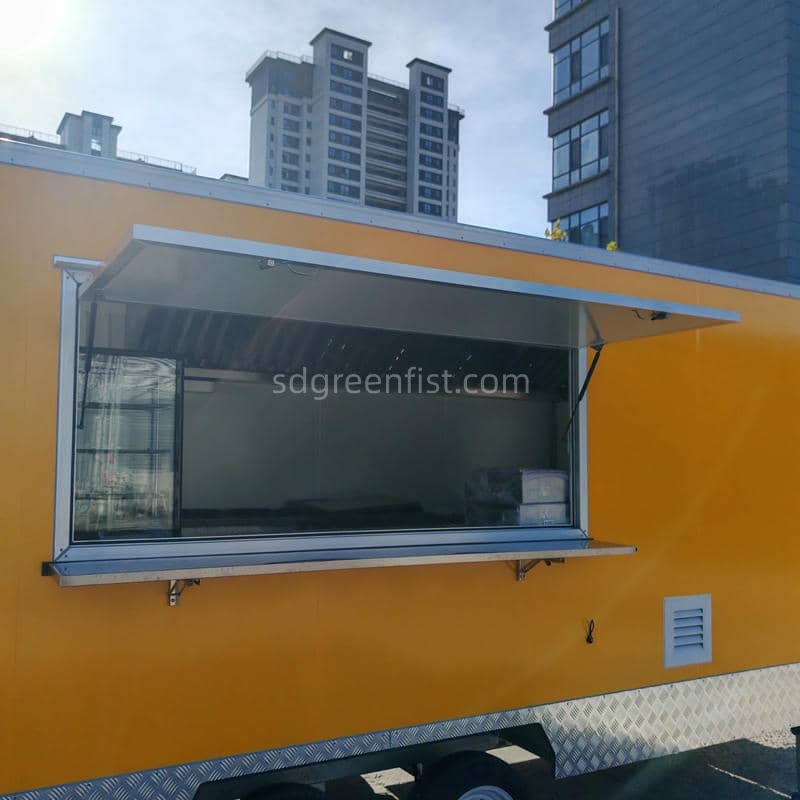
The service window should provide an efficient connection between the kitchen and customers.
A professional square food trailer manufacturer can help design the interior layout around your specific menu and equipment requirements.
7. Select the Right Food Trailer Equipment
The equipment required depends on the type of food you plan to sell.
Common food trailer equipment includes:
- Commercial refrigerators
- Freezers
- Fryers
- Grills
- Ovens
- Coffee machines
- Ice cream equipment
- Stainless steel work tables
- Commercial sinks
- Storage cabinets
- Exhaust hood systems
- Electrical control systems
For example:
Coffee Trailer
May require:
- Espresso machine
- Coffee grinder
- Refrigerator
- Water system
- Storage
BBQ Trailer
May require:
- BBQ grill
- Smoker
- Preparation tables
- Refrigeration
- Exhaust system
Ice Cream Trailer
May require:
- Ice cream freezer
- Display freezer
- Refrigeration
- Service counter
The equipment list should be confirmed before manufacturing begins so the manufacturer can design the trailer around the actual equipment dimensions.
8. Select Durable Food Trailer Materials
Food trailers are exposed to transportation, weather, moisture, heat, and daily commercial use.
Material selection therefore plays an important role in long-term durability.
304 Stainless Steel Interior
304 stainless steel is commonly used for commercial kitchen surfaces because it is:
- Durable
- Easy to clean
- Corrosion resistant
- Suitable for food preparation environments
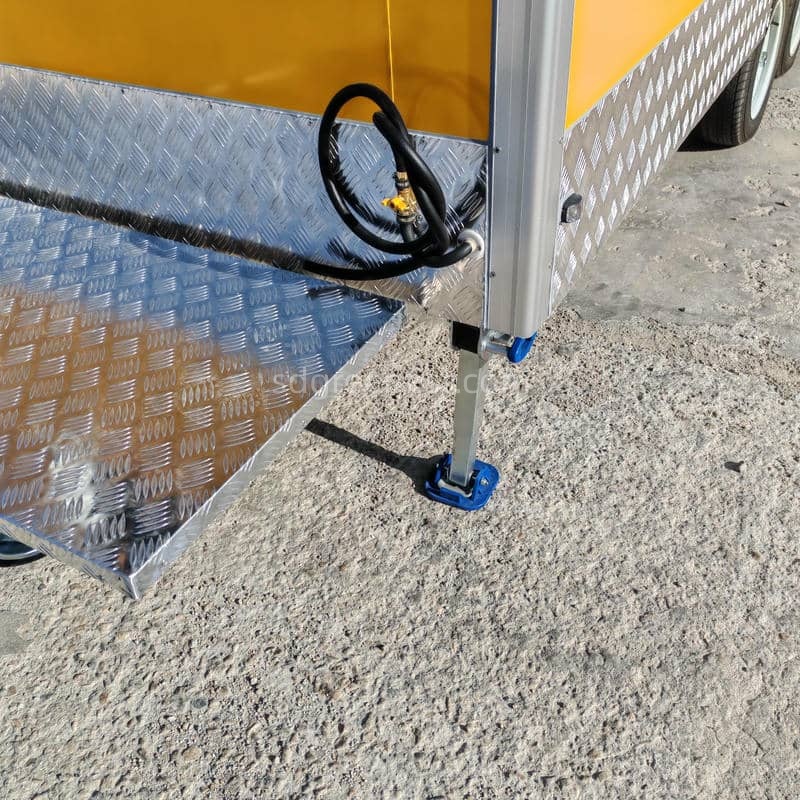
Anti-Slip Flooring
A durable anti-slip floor can improve safety and make cleaning easier.
Durable Exterior Construction
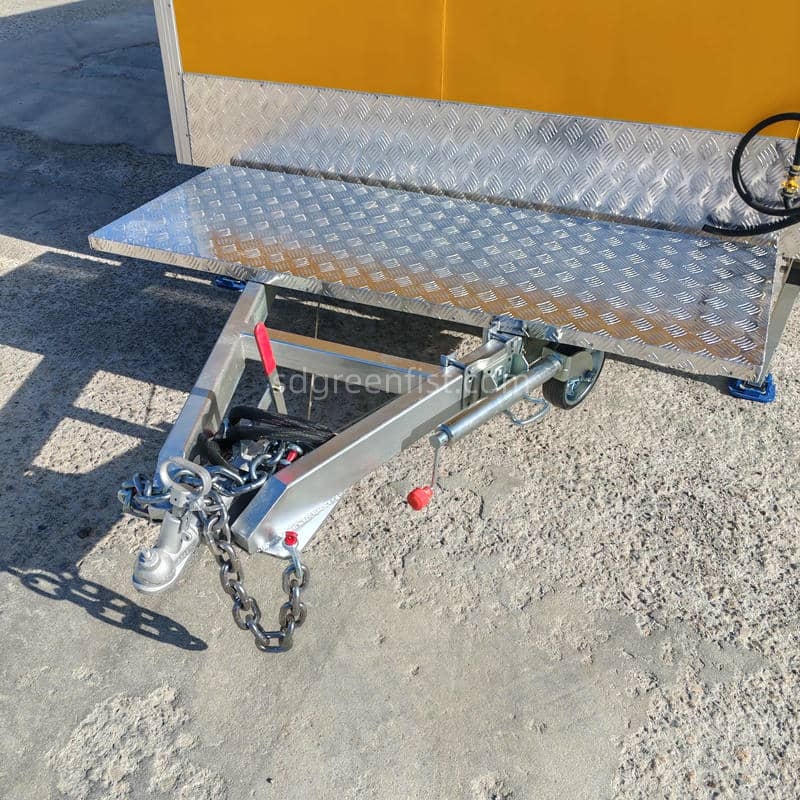
The exterior should be designed to withstand transportation and outdoor operating conditions.
When comparing manufacturers, ask what materials are used for the trailer body, interior surfaces, flooring, and structural components.
9. Understand Food Trailer Requirements in Your Area
Food trailer requirements can vary depending on your state, county, and city.
Before ordering a trailer, research the regulations that apply to your intended operating location.
Depending on your location and business model, requirements may involve:
- Business registration
- Food service permits
- Health department requirements
- Fire safety
- Electrical systems
- Insurance
- Trailer registration
- Local vending regulations
It is important to confirm the current requirements with the relevant local authorities before finalizing your trailer design.
This can help you avoid expensive modifications after manufacturing.
10. Choose a Reliable Food Trailer Manufacturer
The manufacturer you choose can have a major impact on the final quality and functionality of your mobile kitchen.
When evaluating a supplier, consider the following factors.
Manufacturing Experience
Choose a company with actual food trailer production experience.
Customization Capability
The manufacturer should be able to customize:
- Trailer dimensions
- Interior layout
- Equipment configuration
- Exterior design
- Electrical systems
- Water systems
Material Quality
Ask about the materials used for:
- Trailer structure
- Interior walls
- Work surfaces
- Flooring
- Doors and windows
Quality Control
Ask how the factory checks:
- Welding
- Structural assembly
- Electrical installation
- Equipment installation
- Interior finishing
Export Experience
If you are purchasing internationally, experience with overseas customers can make communication and logistics easier.
You can learn more about our food trailer manufacturing experience and company background before discussing your project.
11. Customize Your Food Trailer Branding
Your trailer is more than a mobile kitchen.
It can also function as a moving advertisement for your business.
A professional exterior design can help customers recognize your brand.
Common branding options include:
- Company logo
- Brand colors
- Product graphics
- Menu display
- Service window design
- Exterior signage
For example, an ice cream business may use bright product graphics, while a coffee business may prefer a clean and modern appearance.
Your trailer design should match your overall brand identity.
12. Develop a Food Trailer Location Strategy
A successful mobile food business usually needs more than one potential operating location.
Consider developing several location channels.
Weekday Locations
Business districts and office areas can provide access to customers during lunch hours.
Weekend Locations
Markets, festivals, parks, and community events can provide additional opportunities.
Private Events
Consider:
- Weddings
- Corporate events
- Parties
- Catering
Seasonal Locations
Depending on your region, tourist destinations and seasonal outdoor activities may provide additional business opportunities.
A diversified location strategy can help reduce dependence on a single location.
13. Build Your Food Trailer Marketing Strategy
A new food trailer business needs visibility.
Useful marketing channels include:
- Google Business Profile
- Local SEO
- Social media
- TikTok
- Local events
- Online reviews
- Customer referrals
High-quality photos and videos are particularly useful for food businesses.
Your food trailer itself should also be visually attractive because customers may take photos and share them online.
A memorable trailer design can therefore become part of your marketing strategy.
14. Calculate Your Ongoing Operating Costs
Startup costs are only part of the financial planning process.
You should also estimate monthly operating expenses such as:
- Ingredients
- Labor
- Fuel
- Insurance
- Location fees
- Equipment maintenance
- Packaging
- Marketing
- Transportation
Knowing your operating costs can help you calculate the sales volume required to reach your target profit.
15. Order Your Custom Food Trailer
After confirming your business concept, budget, menu, equipment, and kitchen layout, you can begin the purchasing process.
Before production begins, confirm:
- Trailer dimensions
- Interior layout
- Equipment list
- Material specifications
- Electrical requirements
- Water system
- Exterior design
- Branding
- Delivery requirements
Clear specifications help reduce misunderstandings and unnecessary modifications during production.
If you are ready to discuss your project, you can contact our food trailer manufacturing team and provide your preferred trailer size, business type, equipment requirements, and customization ideas.
Common Mistakes When Starting a Food Trailer Business
Starting a mobile food business can be exciting, but poor planning can lead to unnecessary costs.
Choosing the Trailer Before Planning the Menu
Your menu should determine the equipment and kitchen layout.
Buying Too Much Equipment
Unused equipment can take up valuable space and increase your investment.
Choosing Only Based on Price
The cheapest trailer is not necessarily the best option.
Consider:
- Materials
- Construction quality
- Equipment installation
- Customization
- Manufacturer experience
Ignoring Local Requirements
Failing to consider local requirements before production may result in additional modifications.
Underestimating Working Capital
Your budget should include enough funds to operate the business after purchasing the trailer.
Is Starting a Food Trailer Business Worth It?
A food trailer can provide an accessible way to enter the food industry, but success depends on more than the trailer itself.
A strong food trailer business combines:
- A clear concept
- Good food
- Efficient operations
- Suitable locations
- Effective marketing
- Competitive pricing
- Careful cost management
The trailer is the foundation of your mobile kitchen, but your business strategy determines how effectively you use it.
Frequently Asked Questions About Starting a Food Trailer Business
How much money do I need to start a food trailer business?
There is no fixed startup cost. Your investment depends on the trailer, kitchen equipment, permits, insurance, inventory, transportation, marketing, and working capital.
The best approach is to create a detailed budget based on your specific business concept.
Is a food trailer business profitable?
A food trailer business can be profitable, but profitability depends on factors such as location, food costs, labor, pricing, customer volume, and operating expenses.
What type of food trailer is best for beginners?
There is no single best option for every entrepreneur.
Coffee, ice cream, BBQ, fast food, and concession trailers can all work for different business models.
Your best choice depends on your menu, target customers, budget, and operating locations.
Can I customize a food trailer?
Yes. A professional manufacturer can customize the trailer size, exterior design, kitchen layout, equipment, storage, electrical system, and water system.
How do I choose a food trailer manufacturer?
Look for manufacturing experience, customization capability, material quality, quality control, export experience, and clear communication.
Final Thoughts
Starting a food trailer business in the USA requires careful planning, but a well-designed mobile kitchen can provide entrepreneurs with a flexible way to enter the food industry.
The key steps are:
- Choose a clear business concept
- Research your local market
- Create a business plan
- Estimate startup and operating costs
- Select the right trailer size
- Design an efficient kitchen
- Choose suitable equipment
- Understand local requirements
- Select a reliable manufacturer
- Develop your location and marketing strategy
For entrepreneurs who need a customized mobile kitchen, a square food trailer can provide a practical combination of workspace, flexibility, and customization.
Greenfist specializes in customized square food trailers for international customers. If you are planning a new mobile food business, you can contact our food trailer manufacturing team with your business concept, preferred trailer size, equipment requirements, and customization ideas.